A family record
The Dufloths
from Württemberg and Alsace, through the Black Sea colonies, to Brazil
“A people without knowledge of their past history, origin and culture is like a tree without roots.”
— Marcus Garvey
We do not inherit only a surname; we inherit a history.
To know it is to honor those who came before and to leave a legacy for those who will come after.
Table of contents
Introduction
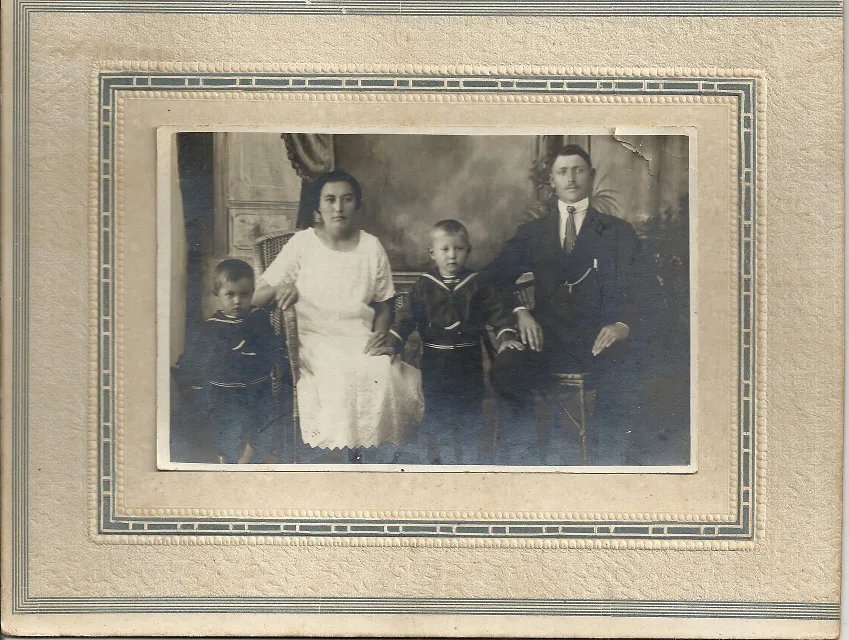
This archive exists to record and tell the story of the Dufloth family — a Black Sea German family that left Württemberg and Alsace, lived in the German colonies of the Black Sea, in Bessarabia, and crossed the Atlantic.
The research began in 1995 and lives on in these pages. It gathers documents, photographs, parish records and the accounts left by Opa Pedro and Oma Hulda.
Historical context
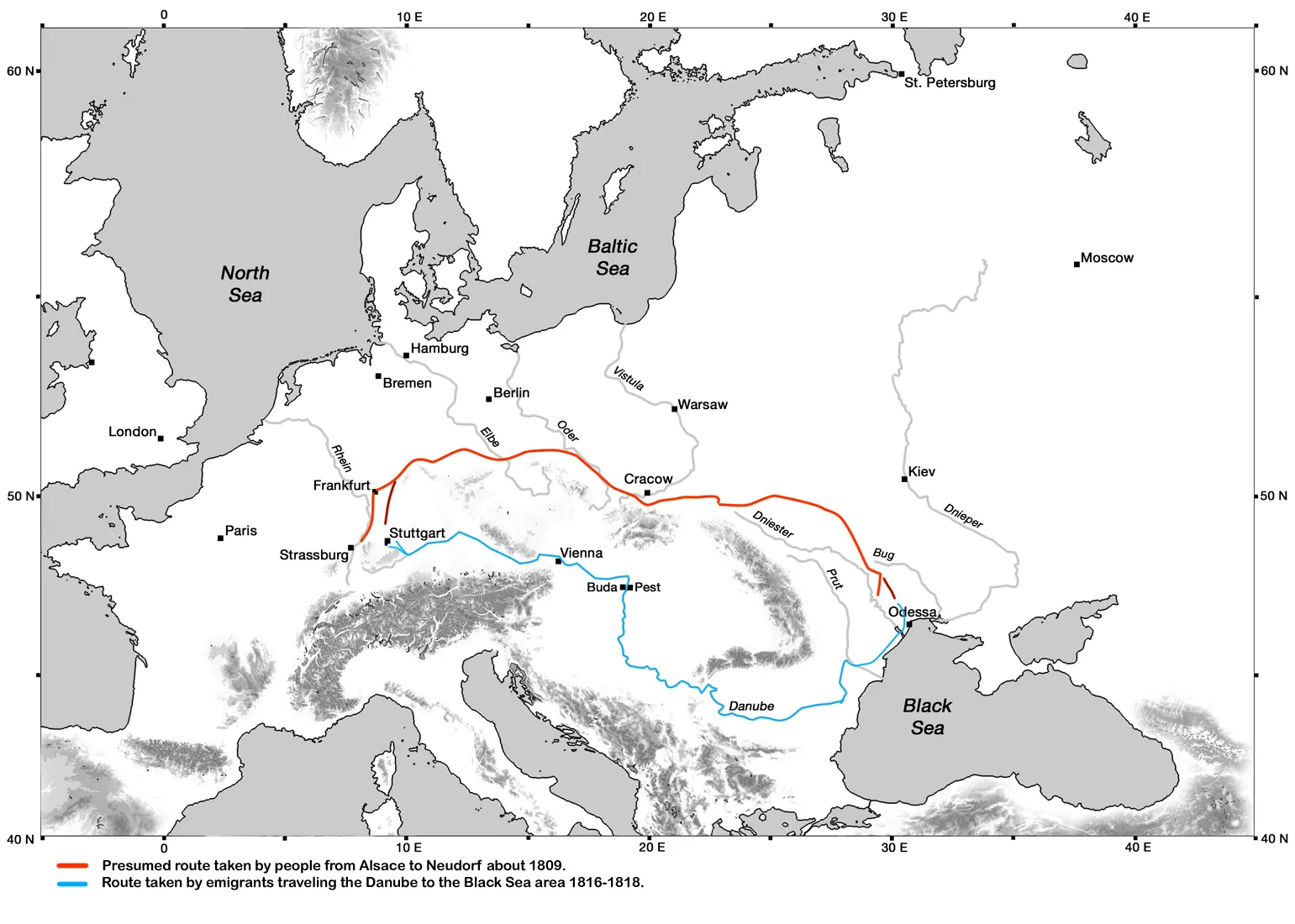
From 1804 onward, thousands of German families — from Württemberg, Alsace and other regions — answered the Russian Empire’s call to settle the steppes north of the Black Sea. They sought land, exemptions and religious freedom; they left behind wars, hunger and estates divided among too many children.
Our ancestors were part of that migration. Friedrich Dufloth married in 1809 and probably emigrated around then — he was not born in Glückstal. The routes ran down through central Europe to the lower Dniester, where the colonies would be born.
The colonies
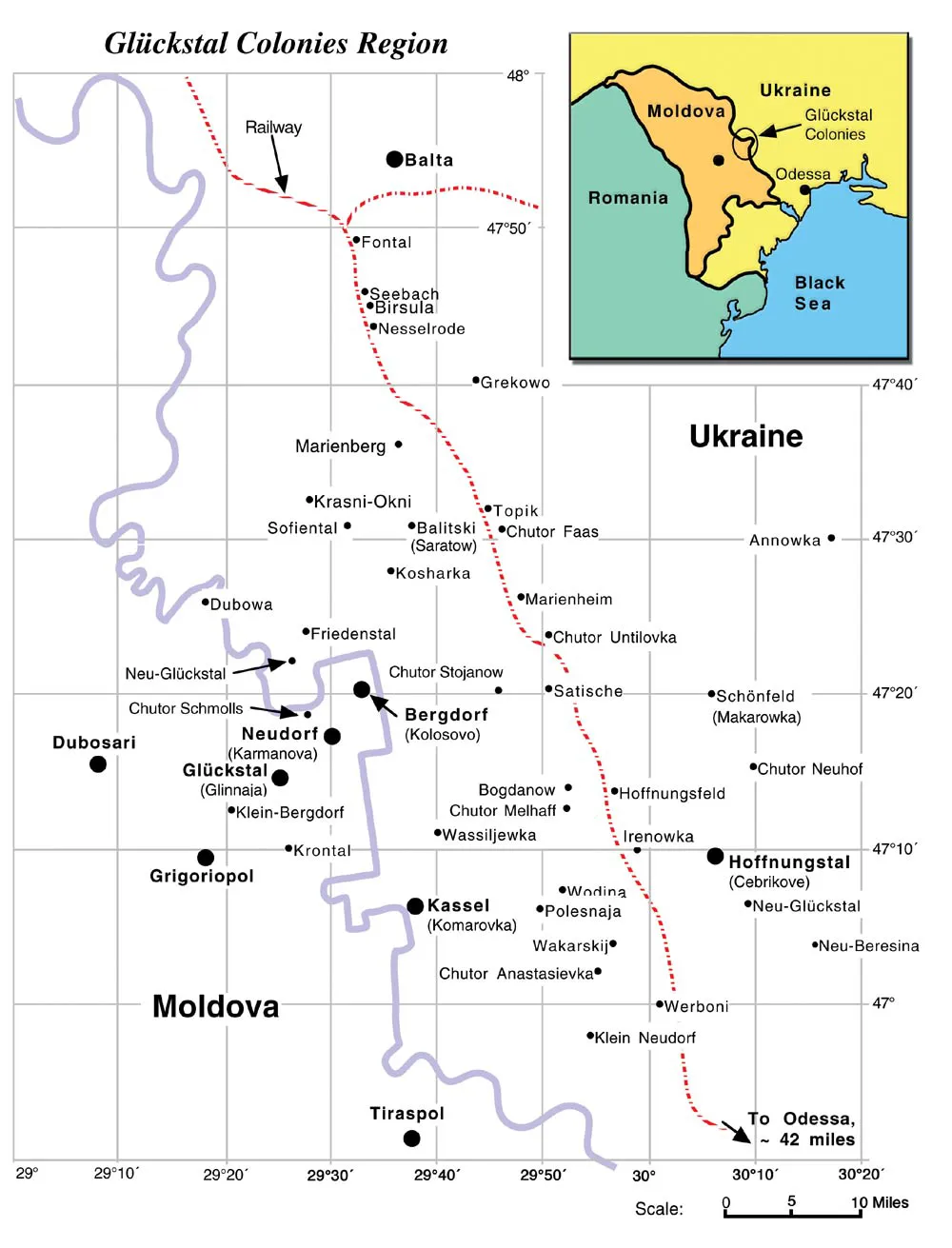
Glückstal was a German colony that, at the time, belonged to Russia (today on the border of Moldova, Ukraine and Transnistria). Around it grew daughter colonies and estates — Neudorf, Bergdorf, Kassel — and, further south, places tied to our story such as Blumental (Hîrtop), Grigoriopol and Kischinew (Chișinău).
For generations the family worked the land, spoke a German dialect, and recorded births, marriages and deaths in the books of the Lutheran parish. It was there — in Glückstal and nearby — that the Dufloth name took root, far from its French origin.
Names and families
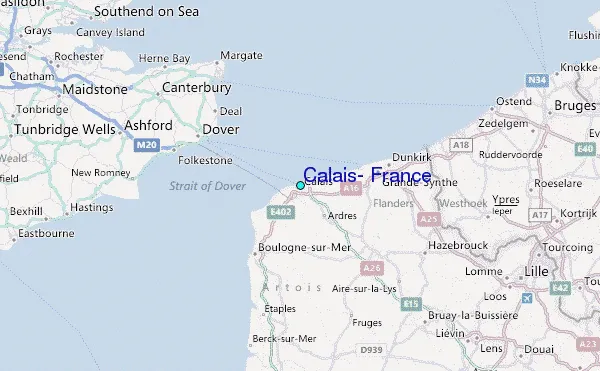
The surname is of French origin: the correct spelling is Duflot, without the H. The oldest record is in the Pas-de-Calais region, in 1672. It denotes “someone who lives at a place called le Floo / le Flos” — in Picard and Walloon, floo is a pond, a waterlogged spot. Variants: Dufloo, Duflos, Duflo, Duflost, Duflou.
Our grandparents said the family originally came from Alsace — a German region in France. On settling in German-speaking land, the name gained a final H to fit the spelling; in the military documents it appears as it is pronounced in German: Tuflat. The names Christian, Christoph, Christine and Peter recur in the family. Tied by marriage come the names Hillius/Gillius (Christine Gillius, Pedro’s mother), Keller and Sailer.
The emigration
Opa Pedro was born on 20 January 1900, in Hîrtop (Blumental in German), town of Cimislia, county of Tighina (Bender) — then in Romania, today in Moldova. He was the son of Christian Dufloth and Christine Gillius. We keep his documents: the birth certificate, the military dispensation certificate (where the name appears as Tuflat) and the probable voter title.
From Romania, in 1925, came Pedro and his wife Hulda with their sons João and Augusto, alongside the brothers Cristiano, João, Cristóvão and Cristine. It was the first Dufloth generation in Brazil.
Not everyone went south: a branch of the family settled in the United States, in South Dakota (Java, Bowdle, Tolstoy). As early as 1885 and 1888 some Dufloths had emigrated there; Christian Dufloth (b. 1855) left for Java, SD, in 1902.
The crossing
From Bessarabia, the family made its way down to Italy and embarked there for the New World. The ship was called Sophia — and it was said, in the family, that it bore the same name as the great-grandmother, Sophia. They were weeks at sea between the old world and the new: from Württemberg and Alsace, through the Black Sea colonies, down to Trieste and across the Atlantic, until they landed at Santos, in 1926.
Life in Brazil
From Santos, the family went south, settling in Rio Grande do Sul, in the region of Erechim. They traded the Black Sea steppe for the forest and farmland of the gaúcho highlands.
There the children grew up and the first Brazilian Dufloths were born. The tree that began in Württemberg, passed through Glückstal and crossed the ocean at last grew new branches in Brazil — the descendants who keep this story alive.
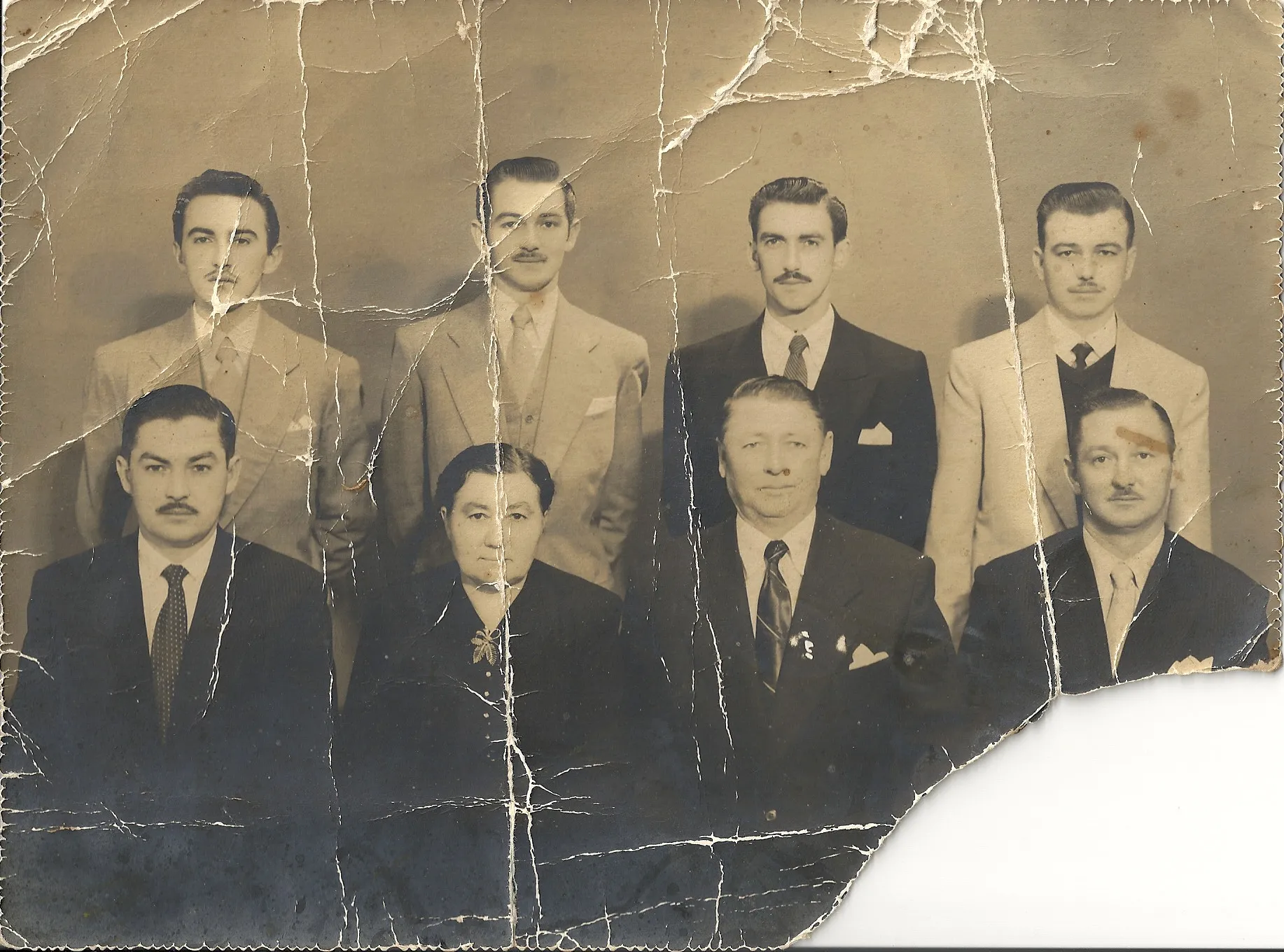
Heritage
Along with the documents and the photographs, the family brought habits and flavors from the Black Sea colonies — recipes that crossed the ocean in the trunks and lived on at the Brazilian table. Comfort dishes, feast dishes, Sunday dishes, still made by the descendants.
Below, three that open the book: Strudla, Knepfla and Kuchen.
Strudla
Steamed dumplings served over meat and potatoes.
Ingredients
- simple bread dough
- potatoes
- meat (pork or chicken)
- onion and lard
- sour cream
Method
- Braise the meat and potatoes with onion.
- Arrange the dough rolls on top.
- Cover and steam until risen.
Knepfla
The creamy dumpling soup.
Ingredients
- flour, egg and milk
- diced potatoes
- onion and butter
- sour cream
- salt and pepper
Method
- Make the dough and cut the dumplings.
- Cook with the potatoes and onion.
- Finish with sour cream.
Kuchen
The custard cake-tart of the German colonies.
Ingredients
- yeast dough
- egg-and-milk custard
- sugar and cinnamon
- seasonal fruit
Method
- Press the dough into the pan.
- Cover with the custard and fruit.
- Bake until the custard sets.